
Request Appointment
Our Location
Monday
Closed
Tuesday
8:00 am - 5:00 pm
Wednesday
8:00 am - 5:00 pm
Thursday
8:00 am - 5:00 pm
Friday
8:00 am - 1:00 pm
Saturday
Closed

Advances in dental materials and clinical techniques have made replacing missing teeth more predictable and natural-looking than ever. While fixed options such as dental implants and bridgework are excellent solutions for many patients, removable dentures continue to be a versatile, time-tested choice for restoring a complete and confident smile.
At Pharos Implants and Oral Surgery, we design dentures with attention to fit, function, and facial harmony. Our approach blends careful assessment, modern materials, and a focus on patient comfort so that your prosthesis supports clear speech, comfortable chewing, and a natural appearance.
We recognize that every patient’s situation is different. Our goal is to offer clear, evidence-based guidance so you can choose the denture solution that best matches your oral health, lifestyle, and long-term goals.
Losing teeth affects more than just the way a smile looks. Teeth are essential for chewing, clear speech, and maintaining the alignment of neighboring teeth. When teeth are missing, the balance of the mouth shifts: remaining teeth can drift, bite patterns can change, and chewing efficiency often declines, which can make enjoying a wide variety of foods more difficult.
Beyond mechanics, the jawbone and soft tissues respond to the absence of tooth roots. Without stimulation from chewing, bone volume can recede over time, altering facial contours and potentially making the lower face appear shorter or sunken. These changes are gradual but meaningful for both function and appearance.
Addressing tooth loss promptly helps preserve oral health and prevents further complications. Whether you’re replacing a few teeth or a full arch, selecting the appropriate prosthetic approach—partial dentures, full dentures, or a hybrid implant option—can restore comfort and confidence while protecting your long-term well-being.
Dentures are removable dental appliances made up of artificial teeth set into a supportive base that fits over the gums. The base mimics natural gum tissue and is shaped to distribute biting forces evenly. Dentures can replace a few missing teeth (partial dentures) or all teeth in an arch (complete dentures).
Because they are removable, dentures allow for daily cleaning of both the appliance and the oral tissues. This accessibility supports hygiene and enables easier inspection of any remaining teeth or soft tissue changes. Removability also means adjustments can be made when needed to maintain comfort as the mouth changes over time.
While fixed options like bridgework and dental implants offer permanent replacements in many situations, dentures remain an important solution—especially when multiple teeth are missing, when anatomy favors a removable prosthesis, or when a staged plan is preferred for restoring oral function.
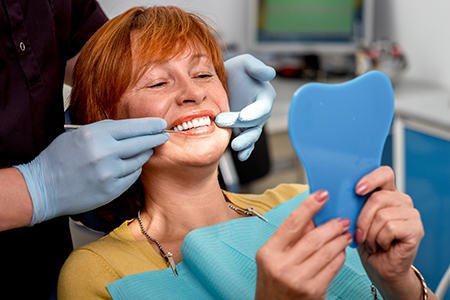
A successful denture begins with a careful clinical evaluation. We consider the number and condition of remaining teeth, the quality and quantity of jawbone, the health of the gums, and your functional goals. These factors guide whether a partial denture, a full denture, or an implant-assisted approach is most appropriate.
Partial dentures are designed to fill gaps when some healthy natural teeth remain. They rely on nearby teeth for support and retention, often using clasps or precision attachments to stay secure. By preserving space and preventing unwanted shifting, a well-made partial denture helps maintain proper occlusion and appearance.
Complete or full dentures replace all the teeth in an upper or lower arch. They can be fabricated as traditional removable prostheses or enhanced with attachments that increase stability. In many cases, full dentures are a reliable way to restore a patient’s ability to eat and speak with confidence when all natural teeth in an arch are missing or must be removed.
Complete dentures restore an entire upper or lower arch and are tailored to an individual’s soft tissue contours, bite relationship, and facial esthetics. The design aims to provide an even distribution of chewing forces while creating a natural-looking smile line and tooth display.
When a traditional full denture is used, it is typically fabricated after healing is complete from any extractions so that the base conforms precisely to the gums. This approach often yields a comfortable fit with predictable long-term stability once tissues have remodeled.
Immediate dentures
Immediate dentures are placed at the same appointment as tooth removal, so patients do not go without teeth during healing. They provide instant esthetic relief but usually require follow-up relines or adjustments as the gums and bone remodel during recovery.
Overdentures
Overdentures gain extra support from remaining tooth roots or specially placed attachments. Preserving selected teeth or roots can enhance stability and improve tactile feedback compared with conventional dentures.
Implant-supported dentures
Implant-supported dentures fasten to a series of dental implants placed in the jaw, providing superior retention and reducing movement during function. This hybrid solution combines the benefits of implant therapy with the versatility of removable prosthetics.
Partial dentures are a conservative way to replace missing teeth while retaining healthy natural tooth structure. Frameworks can be crafted from metal, flexible resins, or hybrid materials, depending on the needs of the case and the desired balance between strength and esthetics.
A well-designed partial denture fills missing spaces and helps protect the arrangement of remaining teeth by preventing unwanted drifting or overeruption. In many situations, partials also serve as transitional appliances while more definitive restorative options are planned.
Throughout the design process, we focus on retention, comfort, and how the denture integrates with your bite and facial proportions so the result feels secure and appears natural.
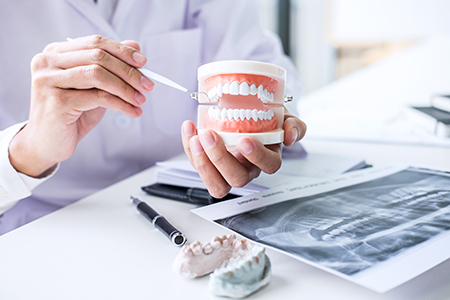
Delivering a successful denture requires thorough planning. We begin with a detailed medical and dental history, soft-tissue assessment, and a review of any remaining teeth. Diagnostic imaging helps us evaluate bone support and identify factors that may affect fit and retention.
When necessary, preliminary procedures such as extractions or minor tissue recontouring are scheduled to create an optimal foundation. These pre-prosthetic steps can improve comfort and decrease the need for future adjustments by shaping the mouth to better accept a prosthesis.
The fabrication process includes impressions, bite records, tooth selection, and try-in stages to confirm fit and appearance. Each step is an opportunity to fine-tune the result so that the final denture meets functional demands while blending naturally with the face and smile.
Collaboration between clinician and patient is essential throughout treatment planning. Understanding how you use your teeth, what foods matter most, and what esthetic goals you have helps us tailor a solution that aligns with your daily life.

Receiving a new denture is a process of adaptation for both mouth and mind. It’s common to experience minor soreness, increased saliva, or small changes in speech during the first days or weeks. These responses typically diminish as muscles and tissues acclimate to the appliance.
Adjusting to wearing a new denture
Initial adjustments are normal. If you notice bothersome pressure points, wearing the denture until your follow-up appointment helps us identify and address the areas that need relief for a more comfortable fit.
Temporary increase in saliva
A temporary rise in saliva production is a natural reaction that subsides as your mouth becomes accustomed to the denture. Simple breathing and swallowing exercises can help speed adaptation.
Speech and pronunciation
With practice, most people regain clear speech quickly. Reading aloud, speaking slowly at first, and focusing on troublesome words can hasten the adjustment period.
Eating with a denture
Start with soft, easy-to-chew foods and cut items into smaller pieces. Avoid biting directly with the front teeth until you feel fully confident; chew using both sides of the mouth to distribute pressure and maintain balance.
Caring for your denture
Rinse and brush your denture after meals to remove food and plaque. Use a denture-specific brush and a nonabrasive cleaner to protect the surface and prevent staining.
Continue brushing any remaining natural teeth and gently clean the gums, tongue, and palate to maintain tissue health and oral hygiene.
Remove your denture at night to give the gums a period of rest, and soak the appliance in water or a recommended cleanser while it is not being worn.
Improving stability
When retention is a challenge, options such as adhesives, attachments, or implant-supported fittings can increase stability and patient satisfaction. We’ll recommend the most appropriate approach based on your anatomy and functional needs.
Ongoing maintenance
Regular follow-up visits allow us to monitor fit, oral health, and the condition of the denture. During these visits, we perform a comprehensive exam to assess tissue health and address any concerns before they affect comfort or function.
Relines and adjustments
Over time, changes in jawbone and gum contours can alter fit. Relining or adjusting the denture restores close contact with the tissues and improves comfort without replacing the entire appliance.
Our team is committed to delivering durable, functional, and natural-looking denture solutions tailored to each patient. If you have questions about whether a denture is the right option for you, or you’d like to learn more about the steps involved in treatment, please contact us for more information.


Today, it’s easier than ever to replace missing teeth and achieve natural-looking, durable, and long-lasting results! Depending on a patient’s dental needs, lifestyle, expectations of care, and budget, choices can include conventional fixed bridgework, dental implants, or removable partial and complete dentures. At the office of Pharos Implants and Oral Surgery, we’ll discuss all your options in care and answer all your questions as you choose the solution that’s right for you.
With advances in dental materials and technology, today’s dentures are more comfortable and realistic-looking than ever before.
Whether you wear partial or complete dentures, it’s essential to see the dentist for routine care. Besides checking the fit and condition of your dentures and making any necessary adjustments, you’ll also receive a comprehensive exam to check on the health of any remaining teeth as well as the soft and hard tissues in and around the oral cavity.
A same-day denture offers an accelerated design and fabrication process that allows a patient to go from impression taking to denture insertion in a single day.
For patients who don’t want to wait after having teeth extracted, an immediate denture can be inserted the same day your teeth are removed. Sometime later you may need the denture relined to address any changes in its fit once the extraction sites have completely healed.
While no one wants to drop or break a partial or complete denture, accidents do happen. The good news is that in some cases, your partial or complete denture is reparable. It all depends on the extent of the damage. Don’t hesitate to contact our office if you’ve broken or damaged your denture. We’re happy to help.
The simple act of taking your partial denture in and out can cause certain types of metal clasps to loosen over time. When you come in for your checkup visit or contact our office for an adjustment, we’ll assess the fit of your partial and tighten the clasps for improved stability and comfort.
While rebuilding a complete smile is a worthwhile investment, our office is sensitive to the costs involved in dental care. We customize care and will discuss which treatment options address your needs, lifestyle, and budget. How much a new denture will cost depends on the type of the prosthesis, its design, and the materials used to fabricate the supportive base, teeth, and clasps or precision attachments. Dentures that include the placement of dental implants for added retention and stability typically involve additional costs.
If you have dental insurance, your coverage may include a new or replacement set of dentures. Our staff is happy to review your coverage with you to ensure you are maximizing your insurance benefits while minimizing any out of pocket expenses.
At the office of Pharos Implants and Oral Surgery, we provide an extensive range of dental services, including the latest and most effective methods to help patients with missing teeth rebuild complete and beautiful smiles. As skilled and experienced professionals, we recognize that every patient is different, and every smile is unique. We’re passionate about what we do and take great pride in providing personalized treatment plans while treating our patients as valued partners in care.
Dentures are removable prosthetic devices that replace missing teeth and the supporting gum tissue. They consist of artificial teeth set into a base that fits over the gums and is shaped to distribute chewing forces evenly. Properly designed dentures restore basic functions such as biting, chewing, and speaking while improving the appearance of the smile.
Because they are removable, dentures allow for daily cleaning of both the appliance and the oral tissues, which helps maintain hygiene and detect tissue changes early. Different denture designs address different needs, and treatment planning focuses on fit, comfort, and facial harmony. At Pharos Implants and Oral Surgery we tailor each denture to the patient’s oral anatomy and functional goals.
Choosing dentures depends on the number and condition of remaining teeth, the quality of the jawbone, gum health, and your functional and aesthetic goals. A clinical evaluation and diagnostic imaging help determine whether a partial denture, a full denture, or an implant-assisted solution best meets your needs. Your personal preferences, daily activities, and long-term oral health plan are also important factors.
During a consultation we review treatment options and explain the benefits and limitations of each approach so you can make an informed decision. If fixed alternatives such as implants are appropriate, we discuss those pathways as well and how they compare in terms of stability and maintenance. The final recommendation is based on clinical findings and what will deliver predictable, comfortable function for you.
Common denture types include partial dentures, which replace several missing teeth while preserving healthy teeth, and complete dentures, which replace all teeth in an upper or lower arch. Immediate dentures can be placed at the same appointment as extractions so you are not without teeth during healing, though they typically require adjustments as tissues remodel. Overdentures use retained roots or attachments to improve stability and preserve bone.
Implant-supported dentures are another option that attach to dental implants for enhanced retention and less movement during function. Materials and frameworks vary from traditional acrylic to metal or flexible resins, and choice of material depends on strength, esthetics, and patient preference. A careful evaluation determines the most appropriate design for predictable fit and function.
Implant-supported dentures are retained by dental implants that are surgically placed in the jaw, providing mechanical attachment points that greatly improve stability and chewing efficiency. Traditional removable dentures rely on suction, tissue contours, and adhesive for retention, which can allow more movement during function. The added support of implants reduces excessive pressure on the gums and can make eating and speaking more confident for many patients.
The process for implant-supported options includes surgical placement and a period of healing before final attachments are fitted, so treatment planning accounts for both surgical and prosthetic phases. Implant options can also help preserve jawbone by transmitting functional forces to the bone, which slows resorption compared with conventional denture support alone. Your clinician will review surgical considerations, healing expectations, and maintenance needs when recommending an implant-assisted approach.
Treatment begins with a comprehensive exam, medical and dental history review, and imaging to evaluate bone and soft-tissue conditions. The fabrication process typically includes impressions, bite records, tooth selection, and try-in stages so fit and appearance can be refined before the final prosthesis is finished. If extractions or minor tissue reshaping are needed, those steps are scheduled and the timing of final denture delivery is coordinated with healing.
Immediate dentures may be delivered at the time of extraction so patients leave the appointment with teeth, but follow-up relines or adjustments are commonly required while tissues remodel. For implant-assisted solutions, surgical placement and a healing interval precede the attachment of the denture. Throughout the process, frequent communication and follow-up visits ensure predictable results and timely management of any concerns.
Adaptation varies by individual but most patients experience initial changes for several days to a few weeks, including mild soreness, increased saliva production, and minor speech changes. Muscles and oral tissues need time to adjust to the new contours and bite, and some activities like pronunciation and chewing may improve gradually with practice. Simple exercises such as reading aloud and starting with soft foods can accelerate adaptation.
Follow-up appointments are important during this period because small pressure points or fit issues can usually be corrected quickly. If discomfort persists beyond a reasonable adaptation period, your clinician will assess the fit, occlusion, and tissue health to determine whether adjustments, relines, or other interventions are needed. Regular review helps ensure the denture becomes comfortable and functional for daily life.
Daily care includes rinsing and brushing the denture after meals to remove food and plaque, using a denture-specific brush and a nonabrasive cleaner to protect the prosthesis surface. Remove your denture at night to give the gums a rest and soak the appliance in water or a recommended cleanser while it is not being worn. Avoid hot water and abrasive household cleaners that can warp or damage the denture base and teeth.
It is also important to continue cleaning any remaining natural teeth and to gently brush the gums, tongue, and palate to maintain tissue health. Handle the denture carefully to avoid dropping it, and bring the prosthesis to follow-up visits so the clinician can examine its condition and perform professional maintenance as needed. Proper daily hygiene extends the life of the denture and supports overall oral wellness.
Routine follow-up visits allow the clinician to monitor fit, oral tissues, and the condition of the denture, and to address any concerns before they affect comfort or function. Over time, natural changes in jawbone and gum contours can alter fit and may require relining, rebasing, or adjustment to restore close contact with the tissues. Regular exams also check for the health of any remaining teeth and screen for oral disease.
Even well-made dentures will need periodic maintenance to remain comfortable and functional, so plan on scheduled reviews as recommended by your surgeon. If you have an implant-supported prosthesis, maintenance includes inspection of the attachment components and periodic professional care to ensure long-term stability. Timely maintenance helps prevent complications and prolongs the usefulness of the prosthesis.
Yes, dentures can significantly influence both facial appearance and chewing function by restoring tooth height, lip support, and jaw relationships. Well-designed dentures replenish lost tooth structure and can help reestablish proper vertical dimension, which supports facial contours and a natural smile line. Improved chewing efficiency and clearer speech are common functional benefits when the prosthesis fits correctly and the bite is balanced.
Because jawbone volume can change after tooth loss, maintaining facial support sometimes requires treatments that preserve bone or use implant support to reduce pressure on soft tissues. During treatment planning, clinicians consider facial proportions and bite relationships to design a prosthesis that looks natural and performs well. Ongoing adjustments and maintenance are often needed to keep both appearance and function at their best.
Our approach emphasizes careful assessment, individualized planning, and clear communication so each denture is designed for fit, function, and facial harmony. We use diagnostic imaging and thorough soft-tissue evaluation to guide decisions about partial, complete, or implant-assisted dentures, and we involve patients in choices about tooth shape, shade, and prosthesis design. Treatment plans balance long-term oral health with the functional and aesthetic goals you describe.
Follow-up and ongoing maintenance are integral parts of care; we schedule reviews to monitor tissue health, perform needed relines or adjustments, and advise on hygiene practices that preserve both the denture and oral tissues. If you have questions or would like to explore denture options in Cornelius, NC, our team is available to explain the process and help you choose a solution that fits your lifestyle.

Our friendly and knowledgeable team is ready to help you schedule appointments, answer questions about procedures, and address any concerns. Whether by phone or our easy online contact form, we’re here to make your experience simple and convenient.
Take the first step toward restoring your smile and discover the difference personalized, expert care can make. Contact us today and let us help you achieve the confident, healthy smile you deserve.

Back to top
